


How to Choose the Most Suitable AC/DC Power Adapter for Your Device
Choosing the most suitable AC/DC power adapter is critical to ensuring stable performance, safety, and long-term reliability of your device.
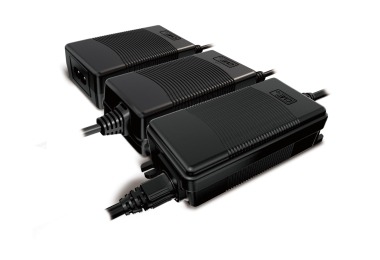
What Is An AC/DC Adapter?
An AC/DC adapter is a power supply device that converts alternating current (AC) from AC mains power into direct current (DC) required by electronic devices. They are typically used as an external power source for electrical devices that cannot draw power directly from AC mains. Therefore, it is an AC/DC converter; when it powers battery-powered devices, it can also be called a charger. AC/DC power adapters have various names in different countries and application scenarios, such as AC DC adapters, AC/DC converters, power adapters, and plug-in power supplies. Essentially, these names all refer to external power supplies that convert alternating current (AC) into the direct current (DC) required by a device; the differences lie in usage habits and industry applications.
How Do AC/DC Adapters Work?
Alternating current (AC) and direct current (DC) are two different electrical signal formats. AC constantly changes direction, flowing alternately between positive and negative terminals in a circuit. This signal format is used to transmit mains power. In contrast, direct current (DC) does not change direction. DC is used to transmit power along transmission towers and also to power telecommunications equipment, car batteries, and appliances that use rechargeable batteries. While internal designs may vary depending on power rating and application, most AC/DC power adapters operate on similar basic principles.
First, the adapter receives AC power input from the mains grid. This input voltage is often too high and unstable for electronic devices. Next, the AC power is rectified, converting it into DC power, the voltage required by the device. Finally, the power cord delivers the DC power from the adapter to the device to charge its battery or enable it to operate.
Like most electrical appliances, AC adapters are designed for compatibility with different power ratings, typically measured in volts (V). They also come with various plugs to accommodate different socket designs. Most AC/DC adapters are not universal and are intended to power only compatible devices. However, some models are designed to serve as alternative chargers for a variety of devices. These universal power adapters are compatible with a range of voltages—such as 100-240 volts—and some even come with different sized plugs.
AC VS DC
The terms "AC adapter" and "DC adapter" are often used interchangeably, but they refer to two distinct types of adapters. An AC adapter converts one voltage to another, typically used to charge electronic devices. A DC adapter, on the other hand, converts AC to DC, typically used to connect devices to an external power source. In simple terms, AC is the type of electricity supplied by the power grid, while DC is the type of power required by most electronic devices.
AC power continuously changes direction and voltage over time. This makes it suitable for long-distance transmission and is why AC is used in wall outlets around the world. However, AC power is not stable enough to be used directly by most electronic equipment.
DC power flows in a single direction with a constant voltage level. Electronic devices such as routers, industrial controllers, medical equipment, and consumer electronics are designed to operate on DC power because it provides stable and predictable performance.
This is where AC/DC power adapters play a critical role. An AC/DC adapter converts AC mains power into regulated DC output, allowing devices to operate safely and reliably.
Common AC/DC Adapter Types
A wide range of AC/DC power adapters is available on the market, each designed for specific power requirements, installation conditions, and application scenarios. Understanding common AC/DC adapter types will help you choose a solution that suits your device's power requirements, installation environment, and usage scenario.
Common AC Adapter Types
There are various types of AC power adapters available on the market, suitable for different applications. An AC adapter is a power adapter that connects directly to an AC power source via a fixed or plug-in input port. They are typically classified according to their installation method and physical design.
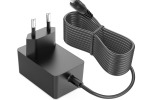
Wall-mounted AC adapters, also known as plug-in adapters, are designed to be plugged directly into a wall outlet. They are compact, easy to install, and widely used in consumer electronics, networking equipment, and small electronic devices.
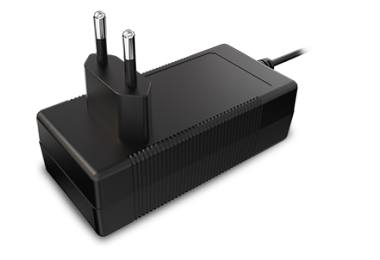
Desktop AC adapters feature an external housing and connect to devices via a DC output cable. Compared to wall-mounted adapters, desktop adapters typically support higher power and offer better heat dissipation, making them suitable for industrial equipment, monitors, and medical devices requiring a stable and continuous power supply.
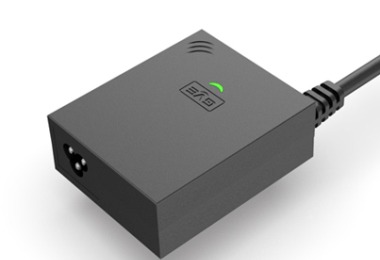
Some AC power adapters support interchangeable power plugs, allowing the same adapter to be used in different regions. This design is often used for products targeting global markets because it simplifies logistics and regional compliance processes.
Common DC Adapter Types
DC adapters come in various types, including those that are wall-mounted and those that sit on a table, and are suitable for different applications. DC adapters are typically classified according to their DC output characteristics, including voltage rating, rated current, and connector type. They are designed to provide a stable and reliable DC power supply for specific devices.
Fixed-voltage DC adapters are widely used for devices with defined power requirements, such as routers, controllers, and consumer electronics. These adapters provide a constant output voltage to ensure reliable device operation.
Adjustable or multiple-output DC adapters are used in applications where different voltage levels are required. They are often found in testing environments, service applications, or devices with variable power needs.
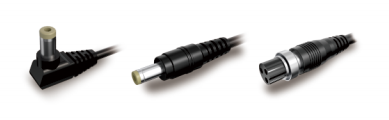
DC adapters may also feature different output connectors, such as barrel connectors or customized DC plugs, to match specific device interfaces. For industrial and OEM applications, DC adapters are often customized to meet exact electrical, mechanical, and safety requirements, ensuring compatibility and long-term reliability.
How to Choose the Right AC/DC Adapter
Choosing the right adapter for your equipment is a crucial step in ensuring its safe operation, stable performance, and long-term reliability. When making a selection, it is essential to consider the basic electrical specifications, as well as the installation conditions, operating environment, and future application requirements.
Power Requirements
The first step in choosing an AC/DC adapter is understanding your device's power requirements. These specifications are usually listed on the device label or in technical documentation. Choose an adapter that provides sufficient power to support your device under all operating conditions. Using an underpowered adapter can lead to performance instability, unexpected shutdowns, or long-term damage to your device.
Output Voltage and Current Matching
Output voltage and current matching is one of the most critical factors when selecting an AC/DC adapter. Choosing an adapter with voltage or current ratings that are too high or too low may cause malfunctions in the connected equipment. The adapter's output voltage must be perfectly matched to the rated voltage of the device. Using the wrong voltage may result in malfunction or permanent damage.
Using adapters with incompatible current ratings can cause problems. When selecting an adapter, the output current rating should be equal to or greater than the current required by the device. Although the device will only consume the current it needs, an adapter with insufficient current capacity may cause overheating or unstable operation. High-quality AC/DC adapters provide a stable voltage output, ensuring voltage stability and reliable performance.
Plug Type and Regional Compatibility
AC/DC adapters are widely used globally, but plug types vary from country to country. When selecting an adapter, it is necessary to consider the required AC input plug type and local power standards. For products targeting international markets, adapters with interchangeable plugs or a wide input voltage range (e.g., 100-240V AC) can simplify logistics and improve cross-regional compatibility.
Durability and Environmental Factors
The operating environment also plays a crucial role in the suitability of AC/DC adapters; factors such as temperature, humidity, dust, and continuous operation should all be considered. Adapters used in industrial, medical, or outdoor environments typically require greater durability, efficient heat dissipation, and built-in protection features to ensure long-term stable operation.
Customization Requirements
In certain specialized industries, standard AC/DC adapters may not fully meet specific technical or mechanical requirements. Customized solutions can effectively address these unique needs, such as unique voltage or current ratings, customized packaging designs, labeling, and safety settings. For OEMs and industrial applications, partnering with experienced AC/DC power adapter manufacturers like GVE allows customers to obtain tailored solutions, ensuring compatibility, compliance, and long-term supply stability.
Why Choose GVE for AC/DC Adapters?
Choosing the right AC/DC adapter manufacturer is just as important as choosing the right technical specifications. A reliable supplier ensures product safety, compliance with certification standards, stable performance, and a long-term, stable supply. GVE is committed to providing reliable power solutions that meet global standards and diverse application needs.

Stable Supply Capability
For original equipment manufacturers (OEMs) and industrial customers, continuity of supply is paramount. Production delays or inconsistent quality can directly impact product launches and long-term projects. GVE possesses stable production capabilities, a rigorous quality control system, and comprehensive supply chain management to ensure consistent and reliable product quality and on-time delivery. With mature production processes and long-term component sourcing strategies, GVE helps customers minimize supply risks and ensure stable project operation.
Comprehensive Certifications
Different markets have different requirements for safety and regulatory approvals, and products may face delays or market access barriers if they do not obtain the appropriate certifications.
GVE AC/DC adapters meet multiple major international safety and efficiency standards, including UL, CE, FCC, GS, PSE, and other regional certifications. This helps customers streamline approval processes and confidently distribute their products in global markets.

Customization Capability
Standard power adapters may not always meet the needs of specific applications. Factors such as voltage variations, special connectors, housing design, labeling, or regional compliance requirements often necessitate custom solutions.
GVE offers flexible OEM and custom AC/DC adapter services, supporting customized electrical specifications, mechanical design adjustments, branding, and regional certifications. Our engineering team works closely with customers to ensure optimal compatibility and reliable long-term performance.
Long-Term Partnership Support
Beyond product provision, long-term partnerships and technical support are also crucial for a company's sustainable growth. GVE is committed to building strategic partnerships with its clients, providing rapid communication, technical consultation, and ongoing product support. Whether it's new product development or future upgrades, we strive to offer stable solutions and professional support throughout the product lifecycle.
FAQs
Q1:What is DC power?
A1:DC power (Direct Current) is a type of electrical current that flows in a single direction with a constant voltage level. Unlike AC power, which continuously changes direction, DC provides stable and predictable energy. Most electronic devices—such as routers, industrial controllers, medical equipment, and consumer electronics—are designed to operate on DC power.
Q2:Is an AC adapter the same as a charger?
A2:Not exactly. In many everyday applications, AC/DC adapters are informally called “chargers” because they power or charge battery-operated devices. However, technically speaking, an AC/DC adapter is a power conversion device, while a charger focuses on battery charging control.
Q3:What is the difference between AC and DC adapters?
A3:The main difference lies in the type of output power they provide. An AC adapter typically converts AC voltage from one level to another AC level. A DC adapter (more accurately called an AC/DC adapter) converts AC mains power into DC output required by electronic devices.
Q4:Can AC/DC adapters be used outdoors?
A4:Standard AC/DC adapters are primarily designed for indoor use. However, certain models can be used in outdoor or industrial environments if they are built with appropriate protection features. For outdoor or harsh environments, factors such as temperature range, humidity resistance, dust protection, and safety certifications must be considered. Industrial-grade AC/DC adapters typically include enhanced durability, protection circuitry, and reliable heat dissipation to ensure stable performance under demanding conditions.
Q5:Why choose GVE AC/DC adapters?
A5:GVE AC/DC adapters are designed to meet international safety and efficiency standards while providing stable and reliable power performance. With comprehensive certifications, flexible OEM customization capabilities, strict quality control, and stable supply management, GVE supports customers in various industries, including industrial equipment, medical devices, and consumer electronics.
By working with an experienced AC/DC adapter manufacturer like GVE, customers benefit from dependable product quality, global compliance support, and long-term partnership stability.