


Power Adapter vs Charger: Clear Differences Explained
Many people use the terms power adapter and charger interchangeably, but they are not the same. Understanding the difference between a power adapter and a charger helps protect devices and ensures correct power delivery.
What Is a Power Adapter?
A power adapter (also called an AC/DC adapter or power supply) converts high-voltage alternating current (AC) from a wall outlet into low-voltage direct current (DC) that electronic devices can use. Most power adapters deliver a fixed or regulated DC output such as 5V, 9V, 12V, or 24V.
Power adapters supply continuous power to devices that do not rely on internal batteries for primary operation. Common examples include routers, monitors, LED lights, security cameras, and many industrial control devices. The main job of a power adapter is stable voltage conversion and delivery.
What Is a Charger?
A charger is designed specifically to recharge batteries. In addition to converting AC to DC, a charger includes charging management circuits that control current and voltage according to the battery’s state. This prevents overcharging, manages charging stages (constant current then constant voltage), and often includes temperature monitoring.
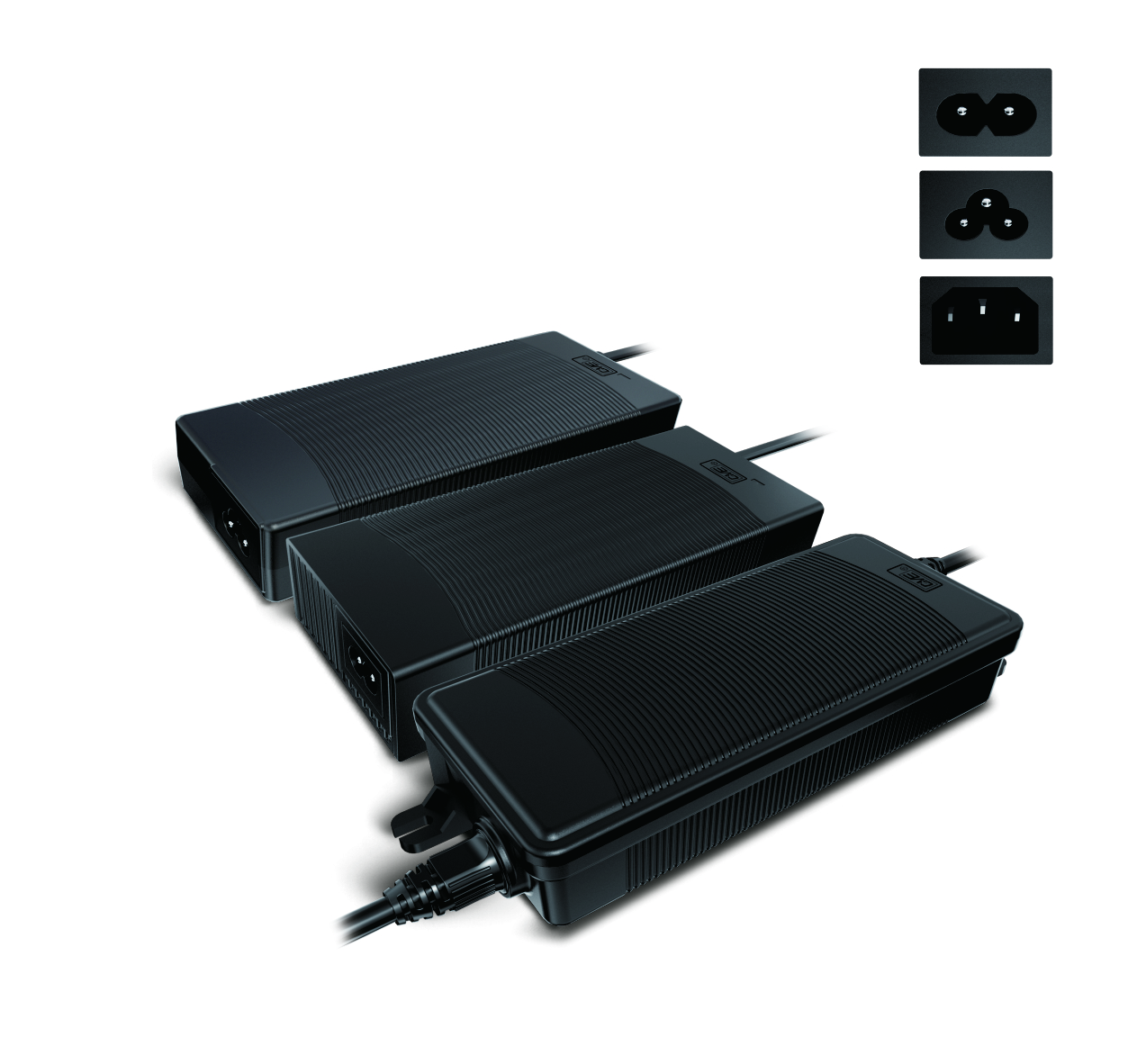
Chargers are used for phones, laptops, power tools, e-bikes, and any device with a rechargeable battery. The key feature of a charger is active battery management, not just power conversion.
Key Differences Between Power Adapter and Charger
|
Feature |
Power Adapter |
Charger |
|
Primary Function |
Converts AC to DC and supplies power |
Converts AC to DC and manages battery charging |
|
Battery Control |
Usually none |
Yes – regulates charge current and voltage |
|
Typical Output |
Fixed voltage (e.g., 12V, 24V) |
Variable or staged for battery chemistry |
|
Common Devices |
Routers, monitors, LED lights, industrial equipment |
Phones, laptops, power banks, e-bikes, tools |
|
Risk if Misused |
May not charge a battery correctly |
Can damage non-battery devices if used improperly |
|
Protection Focus |
Over-voltage, over-current, short-circuit |
Overcharge, temperature, battery-specific protection |
The most important difference is that a power adapter primarily supplies power, while a charger actively manages the charging process of a battery.
Why the Confusion Exists
In everyday language, people often call any wall plug “a charger.” Many modern devices combine both functions in one unit (for example, a laptop power brick that both powers the laptop and charges its battery). However, from a technical and safety perspective, the distinction remains important.
Using a pure power adapter on a battery-powered device without proper charging circuitry can lead to incomplete charging or battery damage. Conversely, using a dedicated charger on a device that expects a constant-voltage power adapter can cause unstable operation.
How to Choose the Right One
When selecting between a power adapter and a charger, consider these points:
- Does the device have a rechargeable battery that needs managed charging? → Choose a charger.
- Does the device simply need continuous DC power? → Choose a power adapter.
- Check voltage and current ratings carefully. Voltage must match exactly. Current (amperage) of the power adapter or charger should be equal to or higher than the device requirement.
- Confirm connector type and polarity. Mismatched connectors or reverse polarity can damage equipment.
- Look for proper certifications (UL, CE, CCC, etc.) and protection features such as over-voltage, over-current, and short-circuit protection.
For industrial or continuous-duty applications, a high-quality power adapter with stable output and strong protection is usually the correct choice. For battery-powered portable devices, a purpose-built charger is required.
Common Use Cases
Power Adapter Applications
- Networking equipment (routers, switches, modems)
- LED lighting systems and signage
- Security cameras and access control
- Industrial sensors, PLCs, and control panels
- Monitors and desktop electronics
Charger Applications
- Smartphones and tablets
- Laptops and portable computers
- Power tools and cordless equipment
- E-bike and scooter batteries
- Portable power stations and power banks
Some products from manufacturers such as GVE are designed as pure power adapters, while others function as dedicated chargers or combined units. Selecting the correct category based on the device’s needs improves reliability and safety.
Safety and Performance Considerations
A properly matched power adapter or charger protects both the device and the user. Key safety features to look for include:
- Over-voltage protection (OVP)
- Over-current protection (OCP)
- Short-circuit protection (SCP)
- Over-temperature protection (OTP)
Compliance with relevant energy-efficiency standards (such as Level VI)
Using an undersized or poorly regulated unit can cause overheating, reduced device lifespan, or failure. Always match the specifications printed on the original device or its manual.
Practical Tips for Users and Buyers
1. Read the device label or manual for required voltage, current, and polarity.
2. Prefer units with a universal input range (100–240V AC) for broader compatibility.
3. For multi-device households or workplaces, consider multi-port USB chargers or interchangeable-plug power adapters.
4. In industrial settings, prioritize robust power adapters with wide temperature ratings and strong EMI performance.
5. Replace damaged cables or units promptly; never force a mismatched connector.
Conclusion
A power adapter supplies stable DC power, while a charger actively manages battery charging. Recognizing this clear difference helps users select the correct unit, avoid equipment damage, and maintain safe operation.
GVE designs and manufactures reliable power adapters and related power solutions for a wide range of applications. Explore high-quality options, review specifications, or contact the team today for expert assistance in choosing the right power adapter or charger for your needs.