


Types of Power Adapters & Global Compatibility
Power adapters convert AC wall power into the DC voltage electronic devices require. Choosing the correct type of power adapter ensures safety and global compatibility across different regions.
Main Types of Power Adapters
Power adapters come in several form factors designed for specific uses. Understanding the main types of power adapters helps users and manufacturers select the right solution for consumer, industrial, or multi-region applications.
Wall Mount Power Adapter
A wall mount power adapter plugs directly into a wall outlet. This compact design saves space and is widely used for routers, smart home devices, security cameras, medical equipment, and LED lighting systems. Many wall mount power adapters feature fixed regional plugs or interchangeable plug heads. High-quality wall mount power adapters offer strong protection circuits and global safety certifications. The wall mount power adapter is ideal when space is limited and continuous power is needed.
Desktop Power Adapter
Desktop power adapters sit on a flat surface and connect to the outlet through a separate AC cord. These units generally support higher power levels and better heat dissipation than a standard wall mount power adapter. Desktop power adapters are preferred for monitors, laptops, industrial equipment, and devices that operate for long periods. Reliable desktop power adapters deliver stable output and consistent performance for higher-wattage applications.
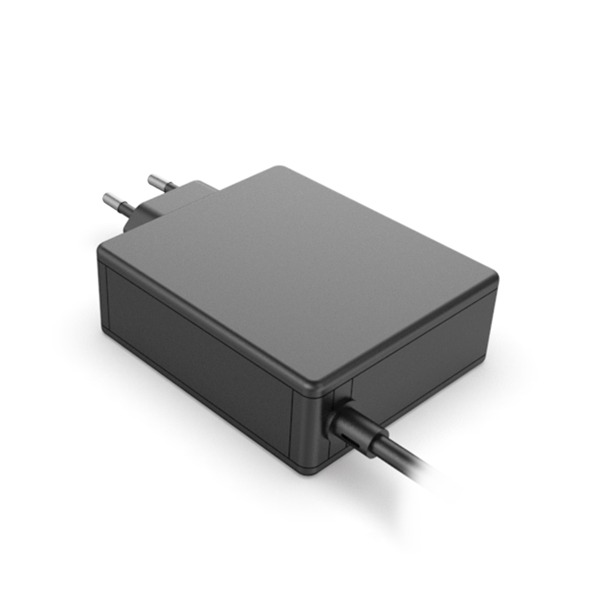
Universal Power Adapter
A universal power adapter accepts a wide AC input range, typically 100–240 V at 50/60 Hz, and often includes selectable output voltages or interchangeable tips. Universal power adapters are popular among travelers, technicians, and OEMs serving multiple markets. Some universal power adapters use auto-sensing technology to match device requirements automatically. The universal power adapter simplifies global compatibility by reducing the need for region-specific units.
USB and Multi-Port Power Adapters
USB power adapters and multi-port models deliver power through USB-A or USB-C ports. Modern USB-C Power Delivery adapters can charge phones, tablets, and some laptops. Multi-port power adapters allow several devices to charge at once, making them useful in homes, offices, and travel kits.
Specialized Power Adapters
Specialized power adapters include laptop adapters with higher wattage and model-specific connectors, industrial power adapters built for harsh environments, medical-grade power adapters that meet strict isolation standards, and waterproof power adapters with elevated IP ratings for outdoor or damp locations. Each type of power adapter serves distinct performance and safety needs.
Global Plug Types and Regional Standards
Global compatibility depends heavily on plug types. More than fourteen plug standards exist worldwide. Selecting the correct plug type is essential for any power adapter intended for international use.
|
Plug Type |
Primary Regions |
Pin Style |
Typical Voltage |
|
Type A/B |
North America, Japan |
Flat parallel pins |
100–127 V |
|
Type C/E/F |
Europe, Russia, South Korea |
Round pins |
220–240 V |
|
Type G |
UK, Ireland, Singapore, UAE |
Rectangular pins |
230 V |
|
Type I |
Australia, China, New Zealand |
Angled flat pins |
220–240 V |
|
Type D/M |
India, South Africa |
Round triangular pins |
220–240 V |
Matching the plug type of a power adapter to the local socket is the first step toward reliable global compatibility.
Voltage and Frequency Standards
Voltage and frequency differ by region and directly affect power adapter performance.
|
Region |
Voltage |
Frequency |
Common Plug Types |
|
North America |
120 V |
60 Hz |
Type A/B |
|
Europe |
230 V |
50 Hz |
Type C/E/F |
|
Japan |
100 V |
50/60 Hz |
Type A/B |
|
China |
220 V |
50 Hz |
Type I |
|
Australia |
230 V |
50 Hz |
Type I |
|
United Kingdom |
230 V |
50 Hz |
Type G |
Most modern power adapters support a universal input range of 100–240 V AC at 50/60 Hz. This wide range gives the power adapter true global compatibility without requiring a separate voltage converter. However, the physical plug must still match the outlet. Interchangeable plug systems solve this challenge by allowing the same power adapter body to accept different regional plug heads.
A plug adapter changes only the shape of the plug. It does not convert voltage. A voltage converter changes the electrical voltage itself. Devices equipped with a universal-input power adapter usually do not need an additional voltage converter.
Key Factors for Achieving Global Compatibility
Several technical factors determine whether a power adapter will work reliably across borders:
- Input voltage range – Prefer 100–240 V, 50/60 Hz for maximum global compatibility.
- Output matching – Voltage must match the device exactly; current rating can be equal or higher.
- Connector type – Barrel jacks of various sizes, USB-C, or custom connectors. Polarity (usually center-positive) must be confirmed.
- Safety certifications – UL or ETL for North America, CE for Europe, CCC for China, PSE for Japan, and SAA for Australia ensure the power adapter meets local regulations.
- Efficiency rating – Level VI or higher reduces heat and energy consumption.
- Protection features – Over-voltage, over-current, short-circuit, and over-temperature protection protect both the power adapter and the connected device.
- Form factor choice – A wall mount power adapter saves space; a desktop power adapter handles higher power and improves cooling.
Interchangeable Plug Power Adapters for Global Markets
Interchangeable plug designs are especially valuable for OEMs and brands selling in multiple countries. A single power adapter base combined with regional plug heads reduces inventory, simplifies logistics, and speeds market entry. Manufacturers that support interchangeable plug power adapters and full customization of voltage, current, connectors, housing, and labeling help improve global compatibility while keeping certification and production costs manageable.
Practical Selection Recommendations
- Consumer electronics and smart-home devices → wall mount power adapter or USB multi-port model with the correct regional plug.
- Laptops and monitors → desktop power adapter or high-wattage USB-C PD unit.
- Travel and multi-region use → universal power adapter with interchangeable plugs.
- Industrial or outdoor environments → rugged desktop or waterproof power adapter with appropriate IP rating.
- Medical or safety-critical applications → certified medical-grade power adapter.
Always check the device label for exact voltage, current, and polarity before connecting any power adapter. Using the wrong type of power adapter can damage equipment or create safety risks.
Additional Considerations for Long-Term Reliability
Beyond basic electrical matching, consider cable length, strain relief, operating temperature range, and electromagnetic compatibility. High-quality power adapters from established manufacturers incorporate better internal components, resulting in longer service life and more stable output under varying loads. For industrial or continuous-duty applications, choose power adapters specifically rated for those conditions.
A complete range of AC/DC power adapters—including wall mount power adapters, desktop power adapters, and customizable universal power adapters—emphasizes efficiency, protection features, and compliance with international standards, supporting genuine global compatibility.
Conclusion
Selecting the right type of power adapter and ensuring global compatibility protects devices and simplifies international distribution. Wall mount, desktop, universal, and specialized power adapters each meet different needs. Modern universal-input designs with interchangeable plugs provide the most practical path to worldwide use. Reliable power adapter solutions engineered for performance and global markets help ensure safe and consistent operation across regions.