


AC/DC Power Adapter Manufacturing Process
An AC/DC power adapter may look simple from the outside, but its manufacturing involves several stages. Component preparation, circuit assembly, product integration and electrical testing all affect how it performs in actual use.
For OEM customers and bulk buyers, understanding the AC/DC power adapter manufacturing process helps when evaluating suppliers, checking production capabilities and preparing for long-term orders. Let's look at the main production stages and how manufacturers manage quality along the way.
Main Components of an AC/DC Power Adapter
Before production begins, the manufacturer needs to confirm the electrical requirements, product structure and component specifications.
Although designs vary between wall mount adapters, desktop power adapters and industrial power supplies, most AC/DC designs involve several common components.
|
Component |
Main Function |
|
PCB |
Supports electronic components and connects the circuit |
|
Transformer |
Transfers energy and provides electrical isolation where required |
|
Capacitors |
Help filter and stabilize electrical output |
|
Power semiconductors |
Control the power conversion process |
|
Protection components |
Support protection against specified electrical faults |
|
Housing |
Protects internal components and provides structural support |
|
Cables and connectors |
Connect the adapter to the power source and end device |
The actual component configuration depends on output requirements, power ratings, product dimensions and intended applications.
For example, a compact wall mount adapter has different structural requirements from a desktop model. Waterproof power supplies also need housing and sealing arrangements suited to their intended operating environment.
Key Stages in AC/DC Power Adapter Manufacturing
The AC/DC power adapter manufacturing process generally starts with incoming material inspection and continues through circuit assembly, internal integration and final product assembly.
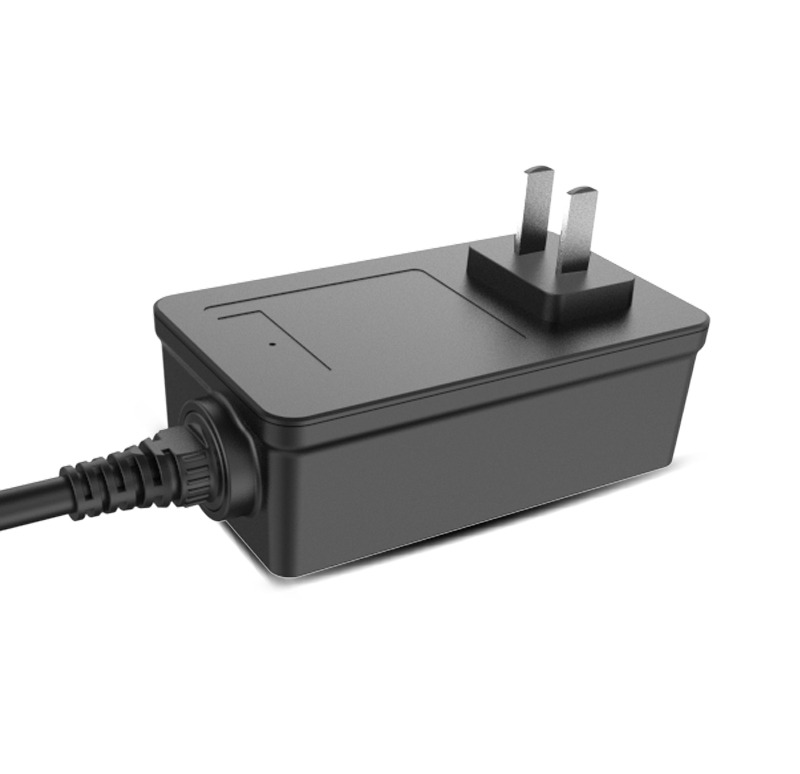
The exact workflow depends on the product design and manufacturing requirements.
Component Preparation and Incoming Inspection
Production begins with the materials and components specified in the bill of materials (BOM).
Before components enter the production process, manufacturers need to check whether the supplied materials match the approved specifications. Part numbers, quantities, appearance and batch information are common inspection points.
This step helps prevent component mismatches from affecting later production stages. It also provides useful material records for quality investigations and production traceability.
PCB Assembly and Soldering
The PCB carries the electronic components responsible for power conversion and circuit control.
Depending on the design, PCB assembly may involve surface-mount technology (SMT), through-hole components or a combination of both.
Component placement and soldering quality deserve close attention. Incorrect placement, poor solder joints or damaged components may affect electrical performance and product reliability.
Internal Assembly and Housing Installation
After PCB assembly, the circuit board, transformer and other internal components are arranged according to the product design.
The internal layout needs to account for insulation requirements, heat distribution, component spacing and available housing space.
A compact wall mount adapter and a higher-power desktop unit may require quite different internal arrangements. The assembly process must follow the approved design rather than rely on one standard layout.
Cable Connection and Final Assembly
The assembled circuit is fitted into the housing, followed by cable, plug and connector installation.
Different product categories have their own structural requirements:
- Wall mount power adapters: Plug configuration, housing dimensions and output connector requirements need to match the intended device.
- Desktop power adapters: External power cords, output cables and housing assembly need to be coordinated.
- Waterproof power supplies: Housing construction and sealing arrangements need to suit the intended environmental conditions.
- Industrial power supplies: Electrical ratings, product dimensions and connection requirements need to match the equipment.
GVE offers different AC/DC power supply products, including wall mount adapters, desktop adapters, waterproof power supplies, LED drivers and industrial power supplies.
For OEM projects, these details should be confirmed before mass production. Changes to connectors, cables or housing structures may affect the assembly process and final product configuration.
Quality Control Throughout Power Adapter Production
A power adapter should not be considered qualified simply because it powers on. Its electrical output, assembly condition and safety performance need to match the agreed product requirements.
Quality control therefore involves more than one inspection point.
Incoming Material and Assembly Inspection
Material inspection helps confirm that components match the approved BOM. During assembly, manufacturers also need to pay attention to component placement, soldering, cable connections and housing condition.
Visual and process inspections can help identify problems before products move to subsequent production stages.
Electrical Performance Testing
Electrical testing checks whether the adapter operates according to its specified requirements.
Depending on the model and test plan, relevant items may include:
|
Test Item |
What It Checks |
|
Input voltage |
Whether the adapter supports its specified input range |
|
Output voltage |
Whether output voltage meets the required specification |
|
Output current |
Whether the adapter supports the specified load |
|
Load testing |
How the adapter performs under different load conditions |
|
Ripple and noise |
Unwanted variations in electrical output |
|
Protection functions |
Whether specified protection features respond as designed |
Not every test applies to every product. Buyers should confirm the actual inspection and testing arrangements for their selected model.
EMC and Safety Verification
Electromagnetic compatibility (EMC) and electrical safety are important considerations when developing power adapters for different markets and applications.
Depending on product design and applicable requirements, verification may involve electromagnetic emissions, immunity, insulation, dielectric strength and leakage current.
GVE established its EMC laboratory in 2013 and introduced EMC and other reliability testing equipment during the same year. This provides an important part of its technical foundation for power supply development and verification.
For OEM and international projects, buyers should also confirm which certifications and test reports apply to the exact product model and target market.
Smart Production Management and Product Traceability
Production management becomes increasingly important when a manufacturer handles different product models, components and large-volume orders.
GVE's Smart Production Solutions page describes a management system built around MES, production monitoring and barcode-based process management.
These systems help organize production information and provide better visibility across manufacturing activities.
MES-Based Production Management
GVE uses its MES system to digitally manage materials, production and product delivery.
Instead of treating each production stage as an isolated task, this approach connects manufacturing information and helps coordinate production activities.
According to GVE, the system is intended to support product quality management and on-time delivery.
Production Monitoring and Barcode Management
Production electronic billboards display manufacturing information, including production data, equipment monitoring and abnormal conditions on the production floor.
This allows relevant production information to be monitored during manufacturing rather than waiting until the final inspection.
GVE also uses whole-process barcode management to organize production steps and identify the roles involved in each process.
For manufacturers handling multiple product models, this provides a clearer way to manage production activities and related information.
Forward and Reverse Product Traceability
Traceability connects finished products with the materials, suppliers and production information behind them.
GVE describes two directions of traceability:
|
Traceability Type |
Main Purpose |
|
Forward traceability |
Identify which finished products used a particular material batch |
|
Reverse traceability |
Trace a finished product back to its materials, suppliers and production records |
For example, if a material batch is later found to have an issue, forward traceability helps identify potentially affected products.
If a finished adapter has a quality problem, reverse traceability helps locate the related material and production information.
This makes it easier to investigate manufacturing issues and identify where further checks may be needed.
GVE's Experience in AC/DC Power Adapter Manufacturing
GVE was established in 1999 and began with AC/DC adapter production. Over time, its business expanded to cover a broader range of power supply products for household, commercial, industrial, security and medical applications.
Its current product categories include:
- Wall Mount Power Adapters
- Desktop Power Adapters
- Waterproof Power Supplies
- LED Drivers
- Industrial Power Supplies
- Chargers
This product range allows GVE to serve different equipment and application requirements. Buyers can also review GVE's company background and manufacturing experience when evaluating a potential power supply supplier.
GVE's manufacturing and technical background also includes several milestones:
|
Company Information |
Published Details |
|
Established |
1999 |
|
EMC laboratory |
Established in 2013 |
|
Annual production capacity |
More than 20 million units |
|
Patent portfolio |
100+ global valid patent licenses |
|
Market coverage |
Supplies customers in 22 countries |
GVE also reports that it reinvests more than 10% of annual sales into R&D. These figures reflect its investment in manufacturing, technical development and product innovation.
For buyers, manufacturing experience is only one part of supplier evaluation. Product specifications, testing arrangements, compliance documents and project requirements still need to be reviewed individually.
What Buyers Should Confirm Before Mass Production
A sample that meets expectations does not automatically mean every production detail is ready. Before placing a bulk order, buyers should confirm the technical and commercial requirements with the manufacturer.
|
Area |
What to Confirm |
|
Electrical specifications |
Input voltage, output voltage, current and power rating |
|
Product structure |
Housing, dimensions, plug, cable and connector |
|
Component requirements |
Approved components and acceptable alternatives |
|
Compliance |
Applicable safety and EMC requirements for the target market |
|
Testing plan |
Electrical performance and inspection requirements |
|
Traceability |
Available material and production records |
|
Order arrangements |
Quantity, packaging and delivery schedule |
It is also worth confirming whether the approved sample matches the final production configuration. This is particularly important for OEM projects involving different connectors, housing designs or electrical requirements.
Clear communication before production helps both parties reduce misunderstandings and maintain consistent product requirements across repeat orders.
Partner with GVE for Your Power Supply Projects
Since 1999, GVE has focused on AC/DC power supply manufacturing, offering a range of adapters and power solutions for different applications. With established manufacturing capabilities and smart production management, GVE supports OEM projects and bulk supply needs. Whether you need a standard power adapter or a customized power solution, contact GVE today to discuss your requirements and get a solution for your project.
FAQs
What Are the Main Steps in AC/DC Power Adapter Manufacturing?
The process generally includes component preparation, PCB assembly, internal component integration, housing installation, cable connection and final testing. The exact workflow depends on product design and manufacturing requirements.
How Do Manufacturers Test AC/DC Power Adapters?
Testing may cover input voltage, output voltage, current, load performance, ripple and noise, as well as specified protection functions. The actual test plan depends on the product model and applicable requirements.
Why Is Production Traceability Important?
Production traceability connects finished products with material batches, suppliers and manufacturing records. It helps manufacturers investigate quality issues and identify potentially affected products.
What Is the Role of EMC Testing in Power Adapter Production?
EMC testing evaluates whether electrical equipment meets applicable electromagnetic compatibility requirements. It helps assess electromagnetic emissions and immunity under specified test conditions.
What Should Buyers Confirm Before Mass Production?
Buyers should confirm electrical specifications, product structure, component requirements, target-market compliance, testing arrangements, traceability and delivery details before approving mass production.